
WHEN A GENOCIDE WARNING NAMES US: WHY BLACK AND BROWN TRANS LIVES ARE AT THE EPICENTER OF THIS CRISIS.

When the Lemkin Institute for Genocide Prevention issued its warning that the United States may be entering the early stages of a genocidal process targeting transgender, nonbinary, and intersex (TGNBI) people, the reaction in many circles was disbelief, discomfort, or dismissal. The word “genocide” feels too extreme, too global, too far removed from the
American imagination.
But for Black and Brown transgender and gender-nonconforming people, this warning does not feel theoretical.
It feels diagnostic. Genocide is not defined solely by mass graves or concentration camps. Raphael Lemkin—the scholar for whom the Institute is named—was clear that genocide is a process, not an event. It begins with dehumanization, legal erasure, economic exclusion, cultural destruction, and state-sanctioned violence. By that definition, Black and Brown TGNC/NB people are not on the margins of this crisis; we are at its center.
The Intersection Where Harm Accelerates
Black and Brown TGNC/NB people live at the intersection of multiple systems of oppression that already shorten life expectancy and restrict access to safety. Racism, anti-Blackness, xenophobia, transmisogyny, and poverty converge to create conditions where harm compounds rapidly and invisibly.
While anti-trans legislation is often discussed in abstract terms—bathroom bills, sports bans,
healthcare restrictions—the lived impact is not evenly distributed. Black and Brown trans people are more likely to:
Rely on public health systems, now barred from providing gender-affirming care
Experience housing instability in states criminalizing their identities
Be targeted by law enforcement under “public order” or “morality” statutes
Face employment discrimination with little legal recourse
When the state removes protections, it does not do so on a level playing field. It removes the thin layer of insulation that allowed the most vulnerable to survive at all.
Legal Erasure as a Prelude to Violence
The Lemkin Institute’s warning highlights the deliberate dismantling of legal recognition and
protection. For Black and Brown TGNC/NB people, legal erasure has immediate consequences.
Identification documents that do not reflect one’s gender increase the likelihood of police harassment, incarceration, and deportation. Healthcare bans do not simply limit “elective care”; they sever access to mental health support, HIV prevention, reproductive care, and trauma-informed services that Black and Brown trans communities disproportionately
rely on.
This is not accidental. History shows that when a group is framed as illegitimate, dangerous, or “unnatural,” violence against them becomes easier to justify—and easier to ignore.
Cultural Dehumanization Is Policy’s Loudest Ally
Genocidal processes require public buy-in. Today, that buy-in is cultivated through media narratives portraying transgender people as threats to children, society, and morality.
Black and Brown trans bodies are particularly weaponized in these narratives—hypersexualized, criminalized, and stripped of innocence.
The result is a culture where violence feels inevitable rather than preventable. Where murders of Black trans women are met with brief outrage, followed by silence. Where the absence of data on trans men, nonbinary, and intersex people is mistaken for the absence of harm.
Silence, in this context, is not neutral. It is enabling.
Why This Warning Must Be Taken Seriously
The Lemkin Institute’s report matters because it names what many communities have been experiencing without the language—or institutional credibility—to be believed. It reframes anti-trans policy not as partisan disagreement, but as a human rights emergency unfolding in real time.
For Black and Brown TGNC/NB people, this framing is urgent. We are already navigating shortened lifespans, disproportionate poverty, and routine exposure to violence. A genocidal process does not need to reach its final stage to be devastating. The early stages are often the most efficient at destroying lives quietly.
What Accountability Looks Like Now
Responding to this warning requires more than statements of support. It demands:
Centering Black and Brown TGNC/NB leadership in policy, funding, and strategy
Treating gender-affirming healthcare, housing, and employment as life-saving infrastructure
Challenging media narratives that dehumanize trans communities, especially those of color
Recognizing that neutrality in the face of systematic harm is complicity
History will not ask whether the signs were clear. It will ask who listened—and who chose comfort over action.
The Lemkin Institute has sounded an alarm. For Black and Brown transgender, nonbinary, and intersex people, that alarm echoes a truth we have been living for decades: when a society decides that some lives are expendable, it starts with those it already refuses to see as fully human.
The question now is not whether this warning is too strong.
It is whether we will respond before the process becomes irreversible.
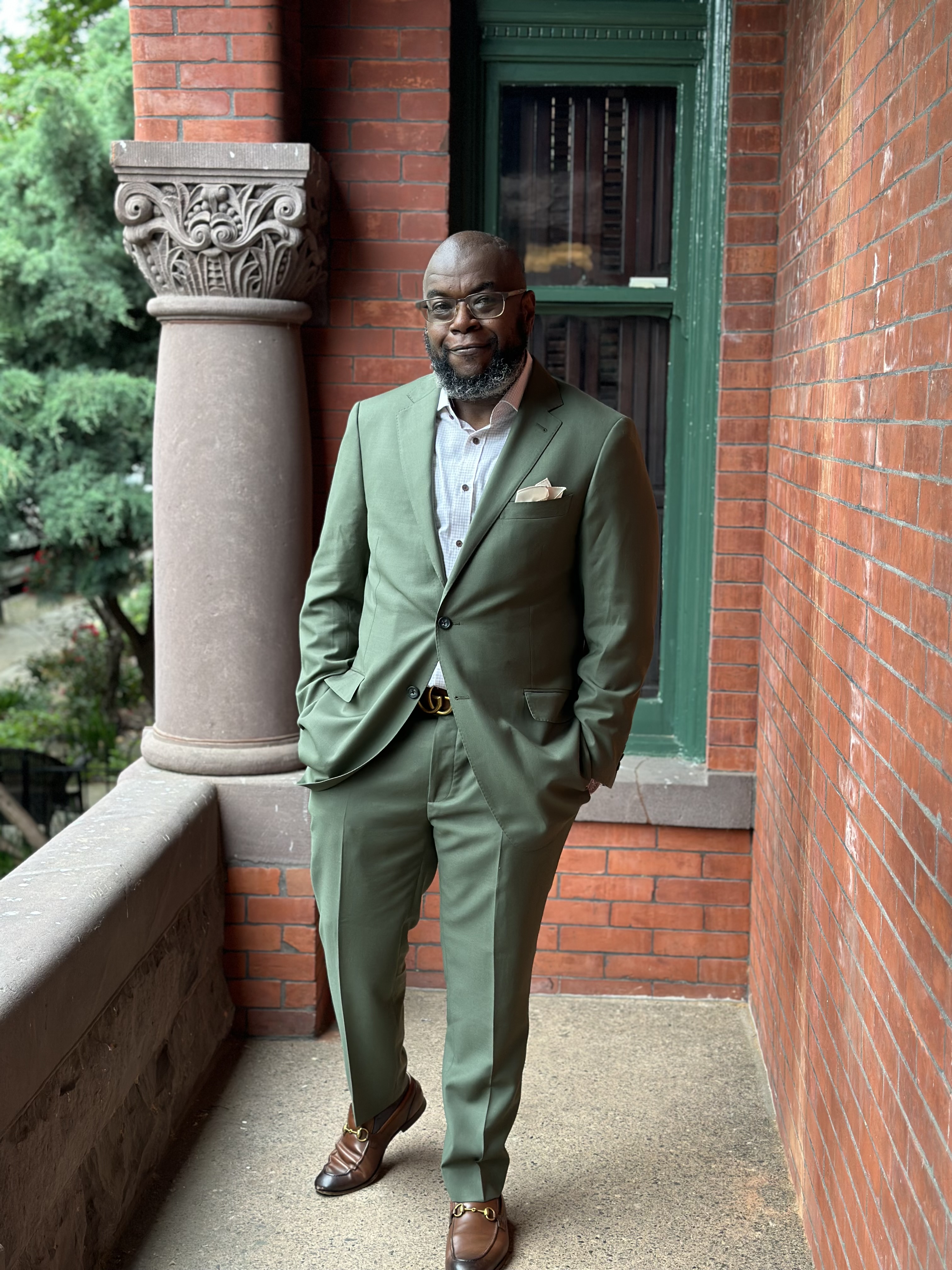
Sean Ebony Coleman is an activist, grant writer and the founder and CEO of Destination Tomorrow, a national nonprofit serving the LGBTQ+ community. Sean will be contributing to a monthly column where he'll provide insight into issues impacting the LGBTQ+ community
and share the joys and challenges of everyday life as a Black Trans New Yorker.
For more information regarding the Honan Strategy/ Destination Tomorrow poll results, please get in touch with me.
Comments